Ever picked up a siding brochure and wondered what “engineered wood” really means? We’re Fort Collins Siding Contractors, and we install engineered wood siding in Fort Collins and the surrounding towns. Here’s the short version: wood strands or fibers get bonded with resin, then finished with a surface overlay.
The boards come as long laps and panels, either primed for paint or prefinished. Our walls take hail, snow and strong high-altitude sun, so how a board is built and sealed really matters.
Grab a coffee. We’ll walk through it the way we’d explain it standing in your driveway.
LP SmartSide and Engineered Wood
Lots of people search for engineered wood siding by typing in LP SmartSide. That’s one maker’s name for engineered wood. If you’ve been reading about LP SmartSide, you’ve been reading about the material on this page.
How Engineered Wood Is Made
The board starts as wood strands or fibers. A resin binder holds them together under heat and pressure, and a surface overlay gives the face its texture and takes paint. The result is a wood-based board that can be made in long lengths.
Long lap boards mean fewer seams across a wall. Fewer seams means fewer butt joints to keep sealed, and a cleaner painted look from the street. Long boards are a big reason people choose them.
On price, a whole house in engineered wood runs $9,000 to $22,000, with tear-off and new trim included.
Lap and Panel Profiles
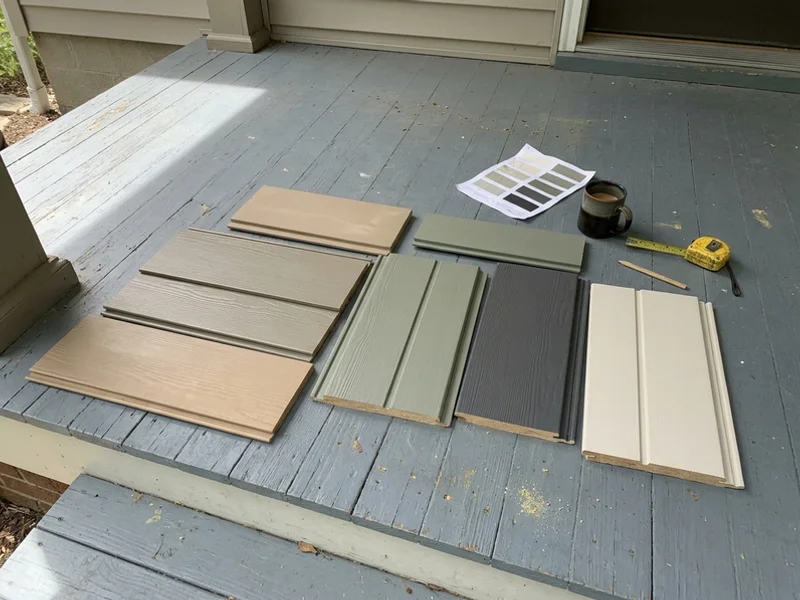
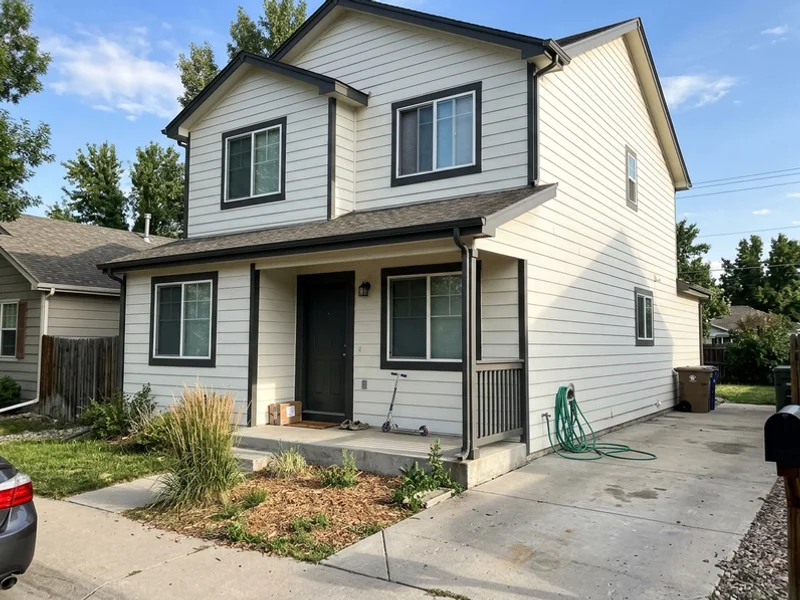
- Lap boards. Horizontal boards with a wood-grain or smooth face, the most common choice for a whole house. They come in more than one width.
- Panels. Larger sheets, often grooved or used with battens for a board and batten look on gables, garages and accent walls.
Matching trim finishes the corners, windows and doors. Mixing laps on the main walls with panels on a gable is an easy way to add contrast without a big change in cost.
Primed or Prefinished
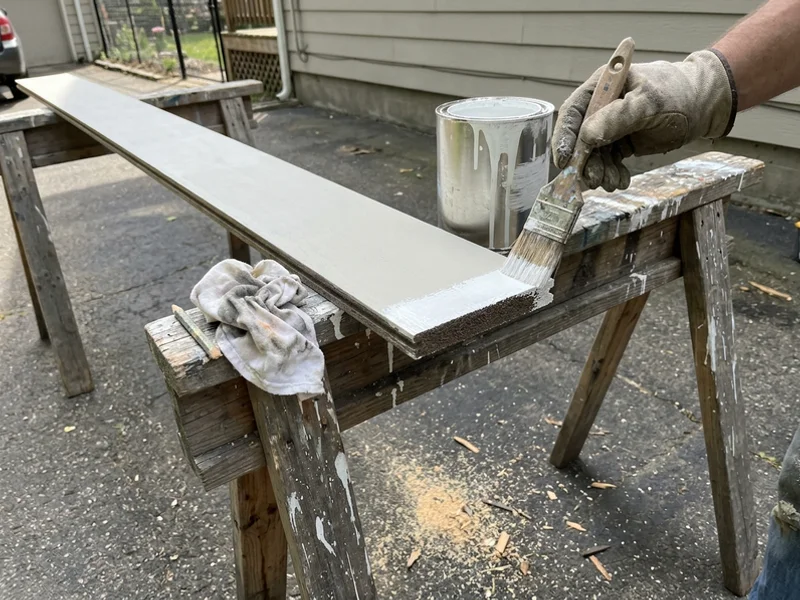
Primed boards go up first and are painted on the wall, so the color is your choice. Prefinished boards arrive with color on them, and we touch up the cut ends and edges after they’re hung.
| Primed | Prefinished | |
|---|---|---|
| Color | Any paint color you choose | A set factory palette |
| When color goes on | After the boards are on the wall | At the factory, before install |
| Our extra step | Paint the whole wall | Touch up cut ends and edges |
Sealing the Cut Ends
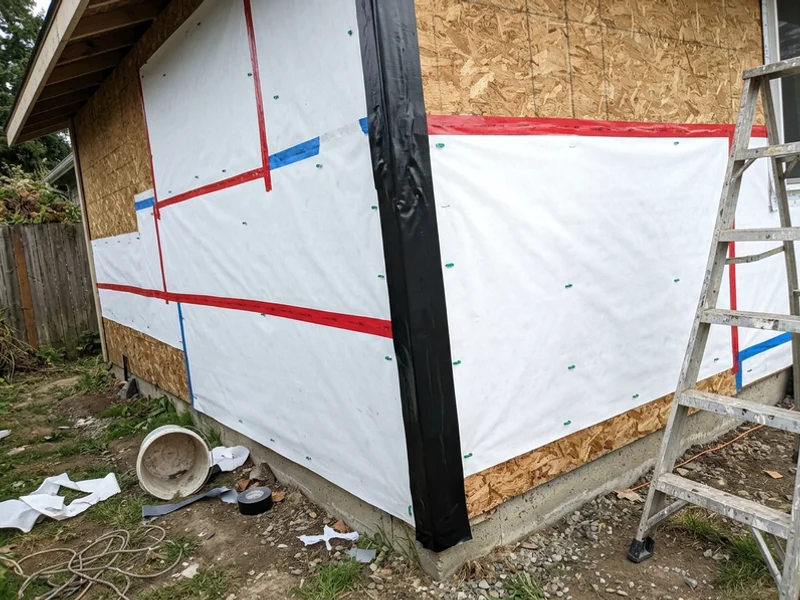
The weak spot of engineered wood is water at cut ends and at the bottom course. Every board we cut gets its ends sealed before it goes up. At the bottom of the wall, we keep the siding up off the ground and away from roof lines, and the bottom course should stay clear of snow piles and sprinkler spray.
These are the details we watch most:
- Ground clearance. The bottom course stays up off the ground.
- Roof lines. A clear gap where siding meets a roof.
- Butt joints and trim. Small gaps, filled with sealant.
- Every exposed cut sealed before the board goes up.
Skipping these steps is the most common way engineered wood fails, and poor ground clearance is one of the most frequent install errors. Keep your sprinklers aimed away from the wall, and shovel snow off the base after a storm.
Engineered Wood and Older Hardboard Siding
Some older houses have hardboard siding, a pressed wood-fiber product from earlier decades. Today’s engineered wood is a different product from that older hardboard.
If you’re replacing hardboard, here’s how the options line up:
- Engineered wood: long boards, fewer seams, and a wood look with a painted or prefinished face.
- Fiber cement siding: the other choice most people compare it with.
- Wood and cedar siding: the option for real wood grain.
Our siding replacement page covers the tear-off and wall prep that come with either. Ready to see what engineered wood siding in Fort Collins would look like on your home? Send the estimate form, and we’ll walk your walls with you and talk through your options.