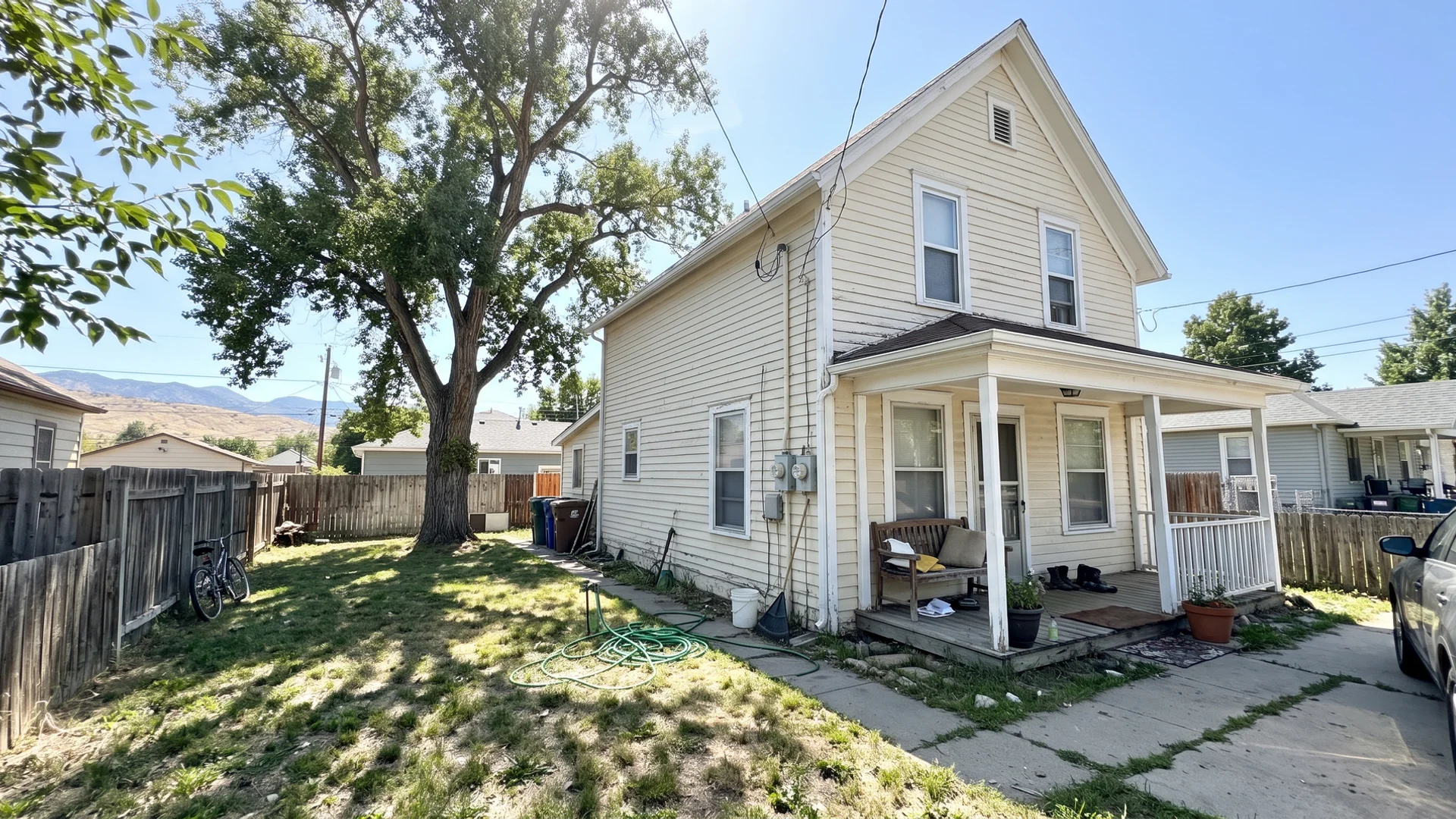
Spotted a cracked panel by the back door, or one flapping after the last windstorm? It looks stressful, but it’s rarely a whole-house problem. At Fort Collins Siding Contractors, we handle siding repair in Fort Collins all year, and most siding doesn’t need to come off the whole house. When a few pieces crack, work loose, dent or go missing, we replace just those pieces. Then we check the wrap behind them and blend the new ones into the siding that’s still sound.
Waiting on small damage costs more than most people expect. Every freezing night is a chance for water behind a crack to do more harm.
Grab a coffee, and we’ll walk you through how a repair works from start to finish.
What Siding Repair Covers
We repair vinyl, wood, fiber cement and older aluminum siding. The damage we see most often looks like this:
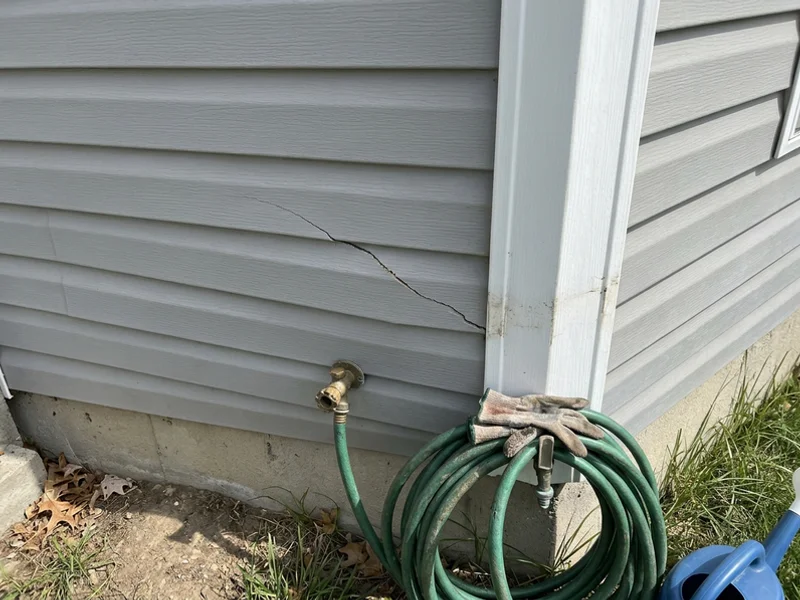
- Cracked pieces. A split in a lap siding panel or a board, often low on a wall or near a corner post where things get bumped.
- Loose pieces. A vinyl panel that has unlocked from the course above it, or a board that has pulled away from its nails.
- Dents and holes. Hail, a ladder, a ball or a lawn mower can dent aluminum and hole vinyl.
- Missing pieces. Wind can catch a loose panel and carry it off, leaving the wrap behind it open to the weather.
Fort Collins freezes at night and thaws by afternoon for a good part of the year. Water that gets behind a cracked board or into an open seam can freeze and open it further, so a small repair is worth doing before it grows.
The price backs that up. Siding repair for a few panels or boards runs $300 to $1,500, far below what a whole-house re-side costs.
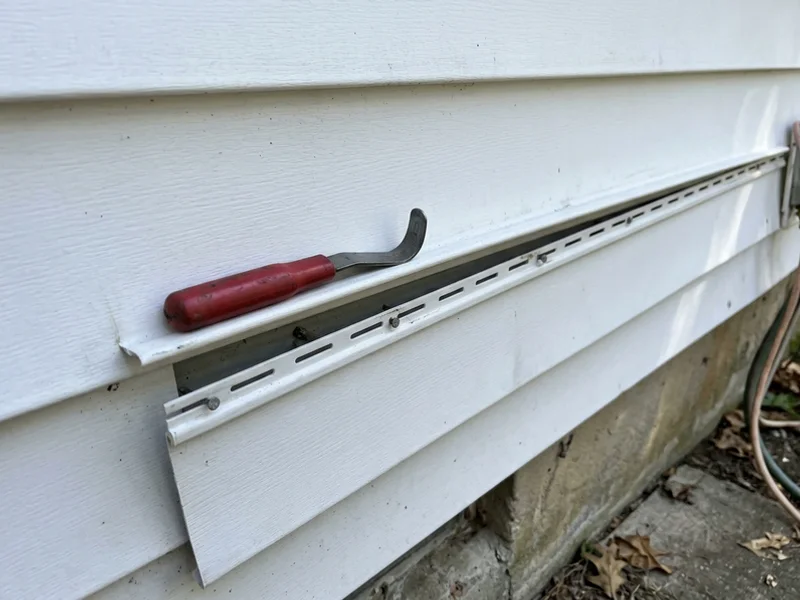
On vinyl, a fix starts with a siding zip tool, a thin hooked metal bar slid along the seam to unlock the course above the damaged panel. That lets the broken piece come out without bending the good ones around it.
Blending New Pieces Into Old Siding
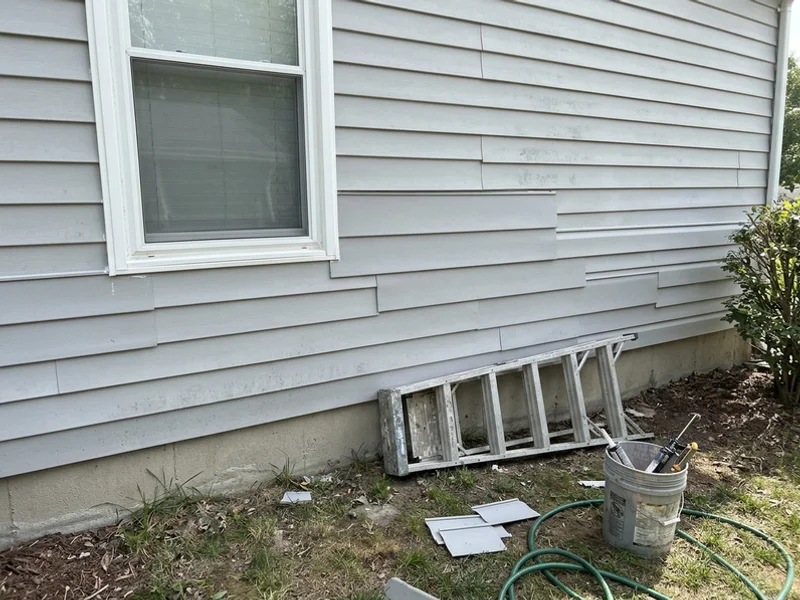
The hard part of a repair isn’t taking out the broken piece. It’s making the new piece disappear into the wall. We match the profile first: the width of each course, the shape of the lap, and the texture on the face. Then we match color as closely as the material allows.
Here’s how that plays out for each material:
| Material | What we match | The catch |
|---|---|---|
| Vinyl | The same profile, or the closest one still made | New panels haven’t faded in the sun like your old ones |
| Aluminum | The same profile | Older profiles are often no longer made at all |
| Wood | We mill or source boards with the same reveal and finish them to match | Finish has to blend with weathered boards |
| Fiber cement | A board with the same face, painted to blend in | Paint has to match the aged color |
Color is the tricky part, especially on vinyl. The profile and panel size can usually be matched, but the exact color rarely can. The old siding has been out in the sun, and the new panel hasn’t.
There’s a workaround for stubborn cases: moving good older panels from a hidden wall, like behind the garage or under a deck, to the visible spot, then putting the new stock in the hidden one. It’s worth asking about if color is your main worry.
Where a perfect match doesn’t exist, we tell you plainly how close the new piece will get before any work starts.
The Wall Behind the Siding
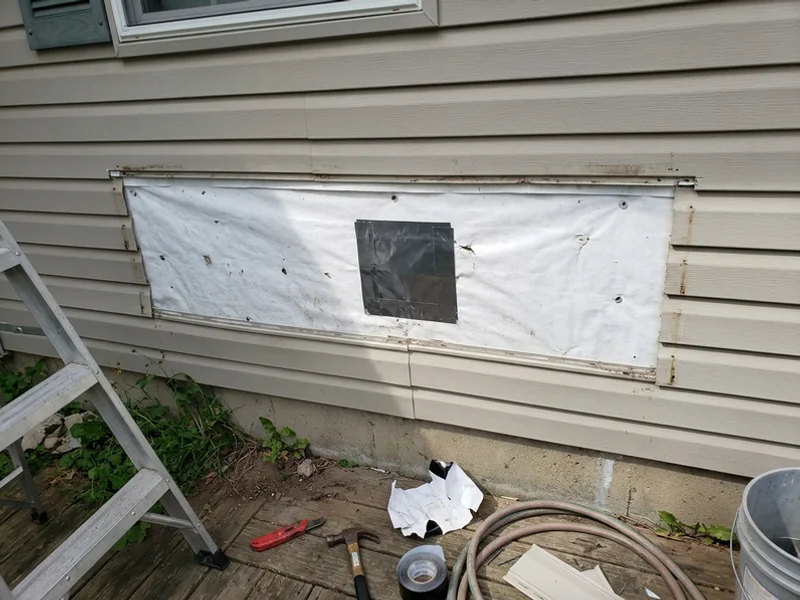
Every repair opens a small window into the wall. We use it. Before the new piece goes on, we look at the house wrap and the sheathing behind it.
Torn wrap gets patched and taped with flashing tape. House wrap isn’t made to sit out in the sun and weather, so the exposed spot behind a missing panel shouldn’t be left open.
Here’s what we check on a typical repair:
- House wrap. Tears and loose seams get patched and taped.
- Sheathing. If it’s soft behind a long-cracked board, we tell you what we found and what fixing it involves.
- J-channel. The trim around windows and doors gets a close look.
- Corner posts. We check for gaps and loose fasteners.
- Butt joints. These seams are another common spot for water to sneak in.
A loose J-channel or a gap at a butt joint is often where water got in to begin with. Gaps between siding and window or door frames, especially along the top and sides, are where leaks tend to start, so we check those spots on every job.
When the Damage Came From Hail
Fort Collins has more than 100 years of hail records. Hail falls a few days in most years, mostly in May and June, and usually lasts minutes.
If a storm did the damage, these pages will point you to the right next step:
- Our hail damage siding repair page covers what hail does to each material.
- If the damage runs across whole walls rather than a few pieces, siding replacement is the other path.
- The eaves above the siding are covered on our soffit and fascia page.
Not sure whether you’re looking at a small fix or something bigger? Reach out, tell us what you’re seeing, and we’ll give you a straight answer on siding repair in Fort Collins before anything gets pulled off your walls.