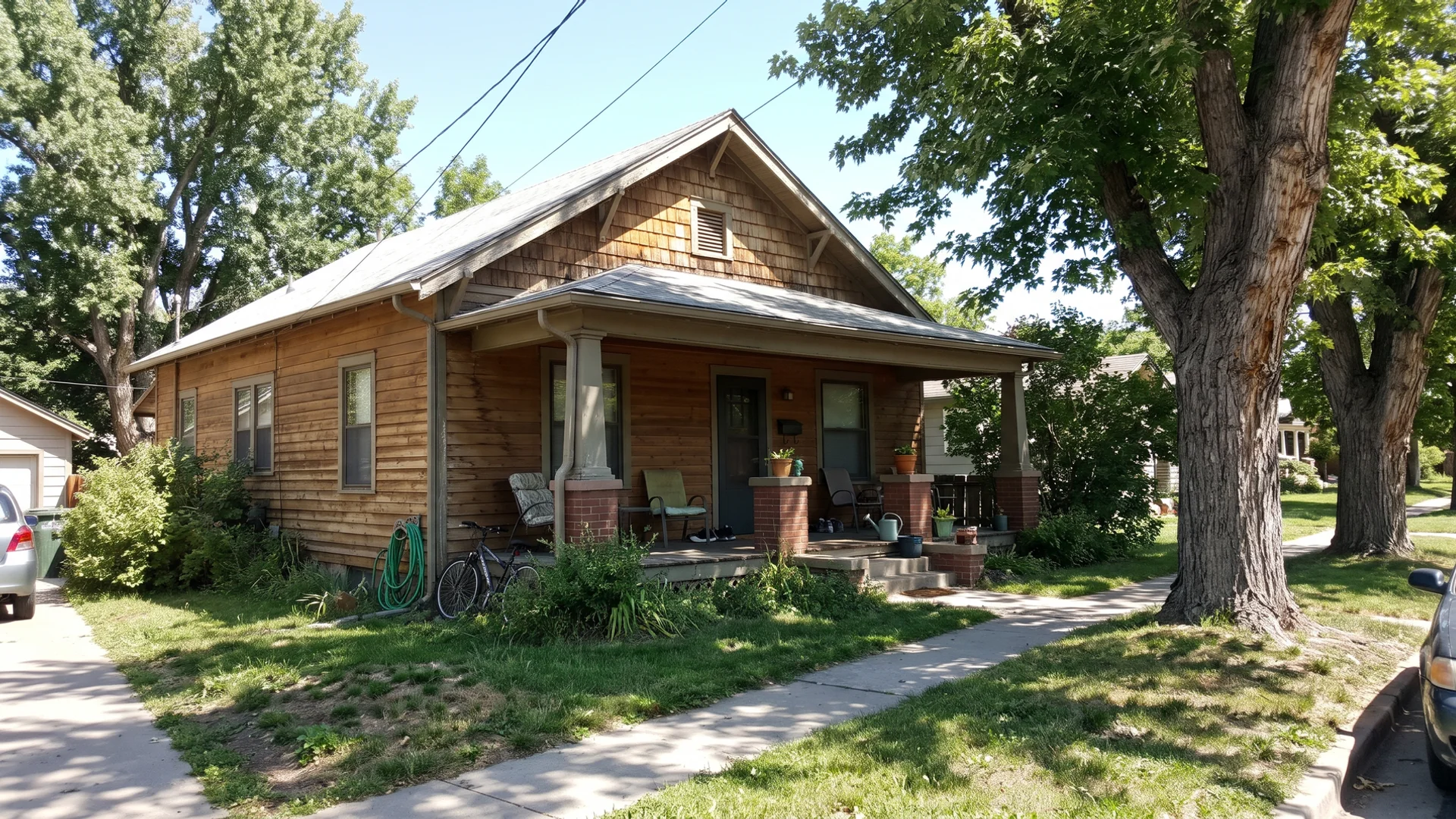
Thinking about cedar siding in Fort Collins but not sure where to start? At Fort Collins Siding Contractors, we install and repair wood and cedar siding on homes in town and the nearby communities. Real wood suits older houses and anyone who loves natural grain.
We handle cedar lap, cedar shingle, other wood siding, and log siding. Below is a quick look at each, plus what to know about finishes, repairs, and historic homes.
Grab a coffee, and let’s walk through it together.
Cedar Lap Siding
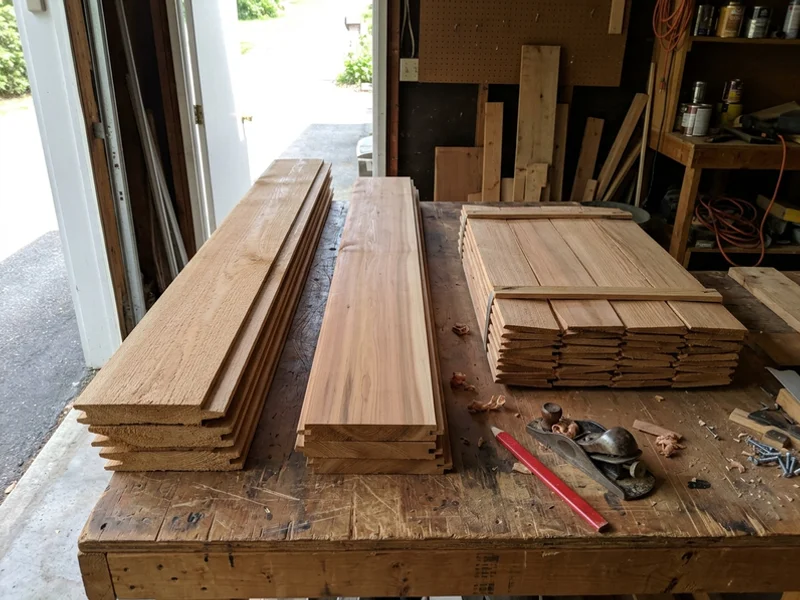
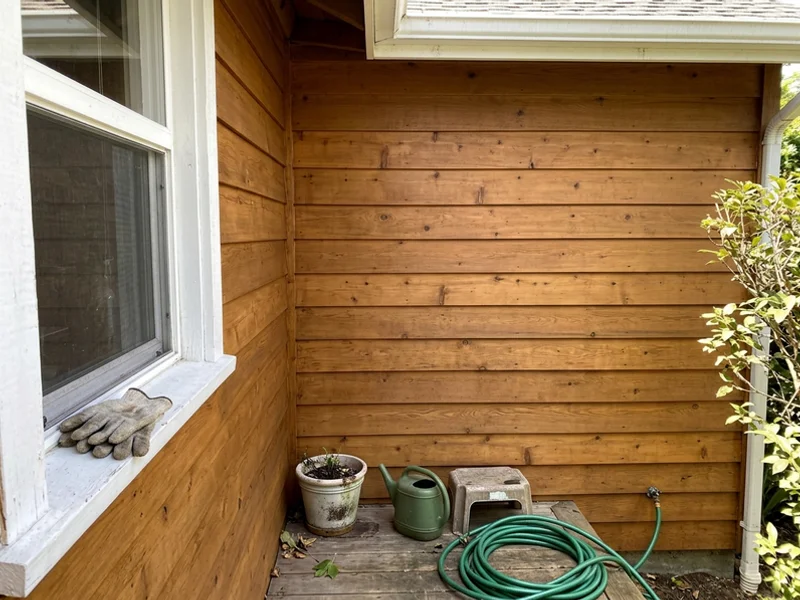
Cedar lap siding is the classic horizontal board. You get two main profiles:
- Bevel siding: Each board is thicker at the bottom than the top. The courses overlap and create a strong shadow line.
- Tongue and groove: Boards fit edge to edge for a flatter, tighter look. They can run horizontal or vertical.
Cost is usually the first question we hear. A whole house in wood or cedar runs $18,000 to $34,000, with tear-off and new trim included.
Cedar Shingle Siding
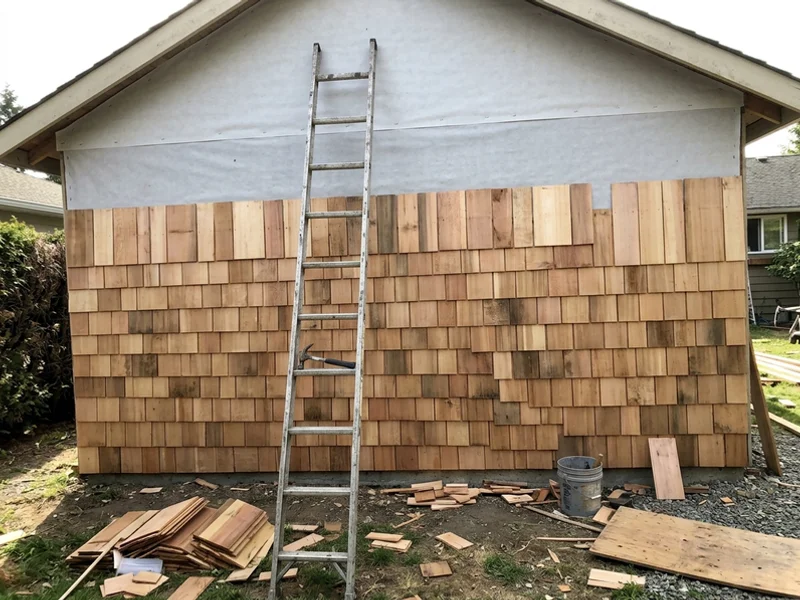
Cedar shingles are laid in staggered rows, one course over the next. People love the texture and the way the color varies from shingle to shingle.
Homeowners tend to use them in three ways:
- On gables for a bit of character
- On accent walls
- Top to bottom, so the whole house is shingled
Where a shingled house lands in that range comes down to grade, style, and how much detail your walls have. A walk around the house tells us far more than a rule of thumb.
Log Siding
Log siding gives the look of a log home on a framed wall. The pieces are rounded on the face and flat on the back. Corners and trim are built to complete the look.
It’s heavier and more involved than lap siding, and it pairs well with houses that sit among trees. Wood does bring one code question. In the parts of Fort Collins the state maps as wildfire interface, re-siding a quarter or more of the walls brings in the wildfire code, and wildfire-rated materials cost more.
We’ll tell you straight which rule applies to your house before you pick a material.
Stain or Paint
Wood siding needs a finish. Here’s how the two main choices compare:
| Semi-transparent stain | Paint | |
|---|---|---|
| Look | Grain shows through | Grain is fully covered |
| Color | Sets the tone of the wood | Solid, uniform color |
| Upkeep | Refinished more often than paint | Depends on the paint and the prep |
Cedar has natural oils and tannins. On light paint colors, those tannins can bleed through as brown stains if the wood isn’t primed correctly.
We prime and finish to prevent tannin bleed: a stain-blocking primer tinted to match the finish coat, applied from the top of the wall down, with caulking after priming.
Board-by-Board Repairs
One of the best things about wood is that you can fix it a board at a time. Here’s how a typical repair goes:
- Cut out the split or rotted board.
- Install a new board.
- Stain or paint it to blend with the wall.
That last step matters. Fresh wood looks different next to weathered boards, so the finish is what makes the patch disappear. This is a siding repair, priced as one.
Historic Houses and Wood Siding
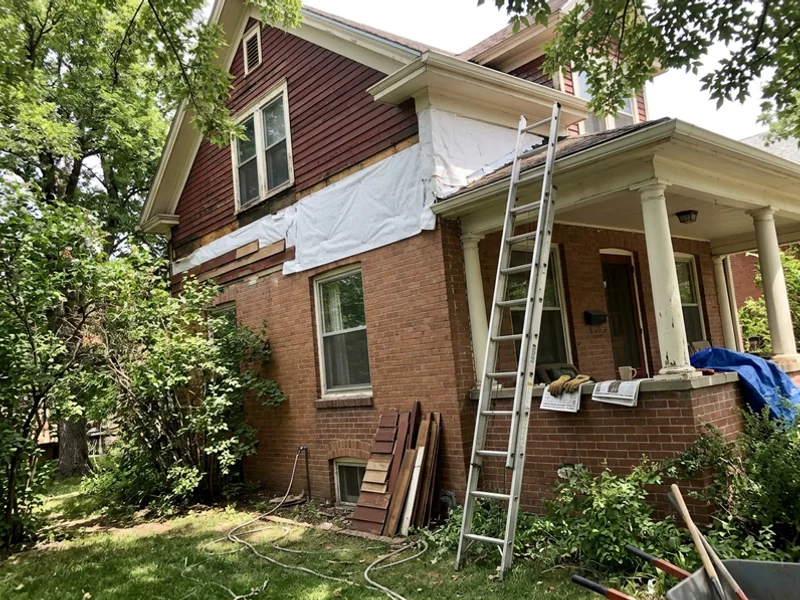
A house 50 or more years old goes through the city’s historic review before re-siding.
Designated historic landmarks need the city’s approval before siding, windows, or paint change. Wood is often the material older houses were built with, so cedar is a natural fit for many of them.
Want a painted wood look at a lower cost? Compare engineered wood siding. For the full tear-off and wall prep, see siding replacement.
Ready to talk about cedar siding in Fort Collins? Send the estimate form, and we’ll look at your walls, your finish options, and any historic review your home may need.